Crayfish, Chinese mitten crab and non‑native crayfish
Here you can read the rules for lobsters, river crayfish and the Chinese mitten crab. The text refers to laws and regulations and explains what you may and may not do.
Fisheries Act 1963
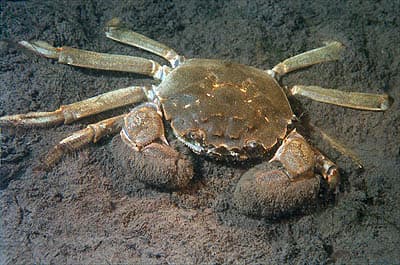
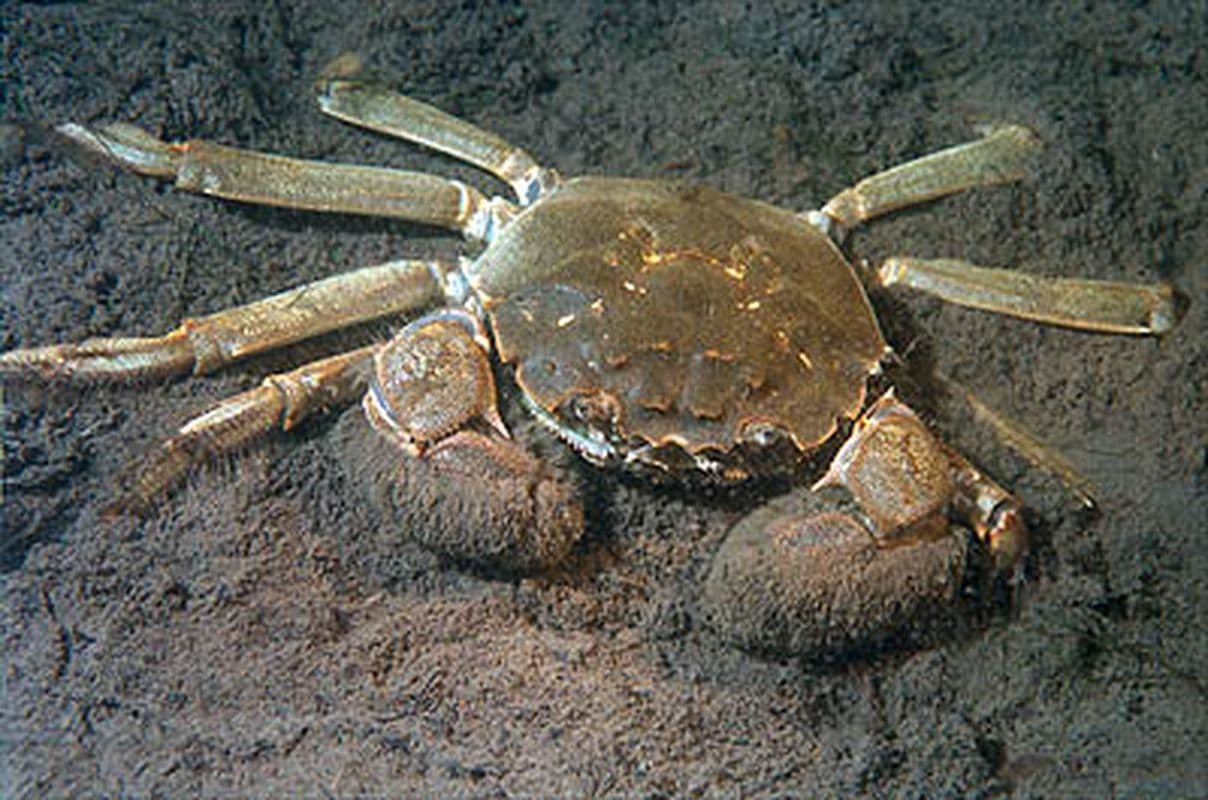
Annex 1 of the Fisheries Implementation Decree lists, among others, the lobster, most crayfish living in inland waters and the Chinese mitten crab as “fish” within the meaning of the Fisheries Act 1963. These species are not protected under the Nature Conservation Act.
Prohibition on release
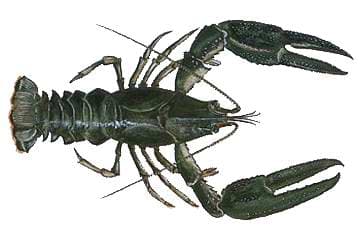
The Fisheries Implementation Decree prohibits releasing the following crayfish species into inland waters:
- Californian crayfish
- Knobbed American crayfish
- Striped American crayfish
- Spotted American crayfish
- Red American crayfish
- Marbled crayfish
- Turkish crayfish
-> More about crayfish species
Note: the definition of “inland water” in the Fisheries Act 1963 also includes water that is entirely located on private land.
Catching crayfish

If you use baskets, fyke nets, nets or other fishing gear in inland waters, the law considers that fishing. Article 1, paragraph 3 of the Fisheries Act 1963 defines fishing as launching, having in the water, hauling or lifting fishing gear, or otherwise trying to obtain fish from the water.
Therefore the following conditions apply before you may fish for crayfish or crabs:
- You must be the holder of the fishing rights yourself (owner or tenant of the fishing rights). Or you must have written permission from the holder of the fishing rights. Article 23 of the Fisheries Act 1963 describes the requirements that permission must meet.
- If the permission concerns commercial fishing gear (all gear other than a rod or a "peur"), the Chamber for Inland Fisheries must approve the permission.
- Only professional fishers may use commercial fishing gear. You qualify as a professional fisher if you hold at least 250 hectares of fishing rights, earn at least €8,500 gross per year from that fishery and have a declaration from the State Secretary.
In short: you may not simply use a fyke, net, lobster pot or other fishing gear. Even a clothespin with bait or a small net on a string is not considered permitted fishing gear.
Exemption or dispensation
You apply for an exemption or dispensation at the Ministry of Economic Affairs. Private individuals rarely receive such an exemption.
Biology: removals often have little effect
Removing animals only has an effect if you operate on a very large scale (around 75% or more of the population). If you only remove the largest specimens from a water body, the remaining crayfish often respond with faster growth. That can make the problem worse.
River crayfish also migrate. In warm waters they move quickly. If you remove crayfish from one part of a large water body, other crayfish often recolonise that spot quickly.
Dioxin contamination
The Chinese mitten crab and eel sometimes contain dioxins and other toxins. Since 1 April 2011 there has been a possession ban for everyone (recreational and professional fishers) on mitten crab and eel in or near certain coastal waters, sea areas and parts of the fisheries zone. There is also a possession ban in certain inland waters.
The possession ban for the fisheries zone, the sea area and the coastal waters is laid down in article 23b of the Fisheries Implementation Decree. The possession ban for inland waters is set out in article 28b of that decree. These bans are based on article 5.10 of the Animal Act.
For recreational anglers it is moreover prohibited in the relevant waters to fish for these animals with a "peur". Breaching the possession ban or the ban on fishing with a "peur" is an economic offence under the Economic Offences Act.
Fisheries zone, sea area and coastal waters
The specific parts of the fisheries zone, the sea area and the coastal waters are listed in Annex 15 of the Fisheries Implementation Decree. Examples include the Beerkanaal, Calandkanaal and the ports of IJmuiden, plus parts of the Nieuwe Waterweg and the Maasmond.
Inland waters
The inland waters with a possession ban are listed in Annex 16 of the Fisheries Implementation Decree. Examples include the Afgedamde Maas, the Amsterdam, Rhine Canal, the Haringvliet, the IJssel, the Waal and many other large rivers, canals and ports. The bans apply within the winter dikes and for harbours, lakes, creeks and river branches in open connection up to the first water barrier.
Native crayfish
The native crayfish (Astacus astacus) is on the protected species list of the Nature Conservation Act. You may not catch, kill or disturb this species. If you fish with gear that may catch this species, you need an exemption under the Nature Conservation Act.
The chance of encountering this native species is very small. The species still occurs mainly in one pond near Arnhem.
Do you have questions about catching, releasing or possessing crayfish and mitten crab? Ask for advice from the Ministry of Economic Affairs or from the Sportvisunie.